
The UGT-C5K ultra-resistant toxic combustible gas sensor is a sensor designed with special materials. It can accurately and stably detect the concentration of combustible gases even in environments with multiple interfering gases (these interfering gases may degrade or even disable the performance of ordinary sensors, i.e., "poisoning"). When ordinary sensors encounter certain high concentrations or specific types of interfering gases, the catalytic or sensitive components inside the sensor may be contaminated or damaged, leading to increased measurement errors, reduced sensitivity, or even complete failure. However, the ultra-resistant toxic combustible gas sensor effectively resists these interferences through special material selection, structural design, or signal processing technology, maintaining good detection performance.
Industry background:
In scenarios such as chemical engineering, municipal administration, and oil and gas industries, combustible gas sensors are often poisoned and rendered ineffective due to corrosive gases such as silicon vapor (e.g., volatilization of silicone sealant) and hydrogen sulfide (H₂S) in the environment. Traditional sensors often experience a sharp decline in sensitivity within hours to months after exposure, or even complete failure, posing a risk of missed alarms. The UGT-C5K ultra-resistant combustible gas sensor addresses the issues of silicon poisoning and H₂S corrosion at their root through "innovation in industrial catalytic materials + structural reconstruction," enabling long-term stable monitoring under complex working conditions.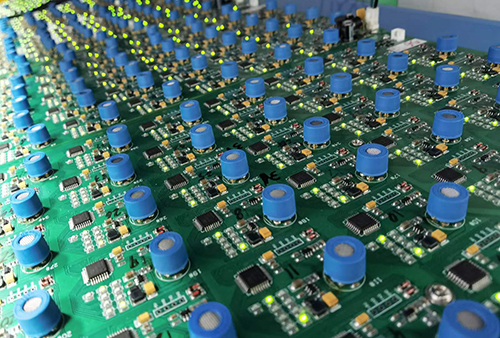
Technical specifications of UGT-C5K ultra-strong anti-poisoning combustible gas sensor
Detection range: 0~100% LEL
Detects gases: Most combustible gases and vapors
Detection accuracy ±3%LEL
Hydrogen sulfide poisoning (10ppm) -5% LEL/40 minutes (tested in a 50% LEL methane gas environment)
Hydrogen sulfide poisoning (10ppm) -5%LEL/40 minutes (tested in a 50%LEL methane gas environment)
Hydrogen sulfide poisoning (100ppm) -25%/120 minutes (tested in a 50% LEL methane gas environment)
Silicone poisoning (100ppm) -20%/120 minutes (tested in a 50% LEL methane gas environment)
Zero drift ±1%LEL
Full-scale deviation ±5%FS
Linearity (0~100% LEL) ±3% (60% LEL calibration)
Response time: 50% LEL T90 < 10s
Technical principle: catalytic combustion
Recovery time: 15s
Service life: 5 years (in clean air)
Warranty period: 2 years (from the date of shipment)
 UK's Airshield hydrogen sensor breaks through the energy storage safety defense line
Industrial innovation! Technical solution of British gas shield combustible gas sensor in robotic dog
UK's Airshield hydrogen sensor breaks through the energy storage safety defense line
Industrial innovation! Technical solution of British gas shield combustible gas sensor in robotic dog
 UK Airshield Ultra-Micro Technology! A Somatic Robot Gas Sensor Launched
 Stirring up heated discussions! UK Qidun unveils a new product: a four-gas sensor module
A technology-based company focusing on research and development of gas sensors
Feel Free To Contact Us →