
Under the dual demands of tightening global environmental policies and "green upgrading" of industrial monitoring, GASSHIELD has launched the UGT-E4 lead-free oxygen sensor. With the triple breakthrough of "lead-free environmental protection+5-year long-term effect+high-precision stability", it completely overturns the technical limitations of traditional lead sensors. Once launched, it has attracted widespread attention and high recognition from experts in industrial, medical, environmental and other fields.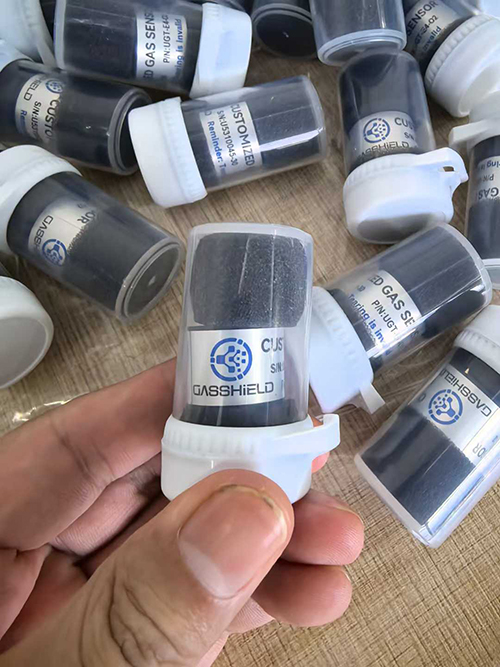
As a benchmark product for lead-free monitoring in the industry, the core innovation of UGT-E4 lead-free oxygen sensor is to completely abandon the lead based components in traditional electrochemical sensors. It adopts innovative lead-free electrolyte and titanium based catalytic electrode, combined with environmentally friendly solid polymer electrolyte. It has been certified by SGS third-party authoritative testing and fully complies with the EU ROHS 2.0 standard, and prohibits six harmful substances such as lead, mercury, and cadmium. This design not only eliminates heavy metal pollution throughout the entire lifecycle from production to disposal, and does not require special environmental treatment after disposal, but also helps enterprises adapt to the increasingly stringent global environmental compliance requirements in advance and break through green barriers in export trade.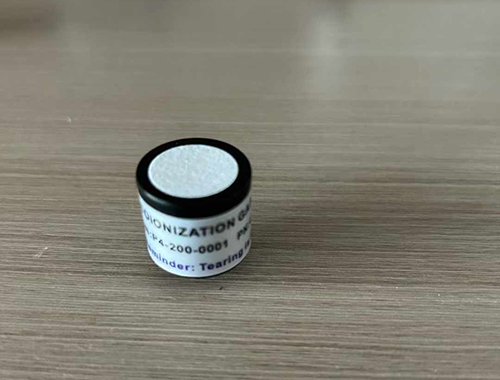
In terms of performance, the unique "electrode stabilization technology" of the British gas shield extends the service life from 1-2 years of traditional sensors to 3-5 years, with an annual drift controlled within ± 0.2% VOL. Combined with a two-year official warranty and dynamic life monitoring function, it can achieve "one-time installation, stable operation for many years". The detection accuracy reaches ≤± 3% F.S., the resolution is 0.1% VOL, the response speed is fast, and the data can still be stably output in a wide temperature range of -40 ℃~70 ℃ and high humidity environment of 0-95% RH. The built-in anti-interference module can better shield common gas interference such as hydrogen sulfide and ammonia, and the selective recognition rate exceeds 99%.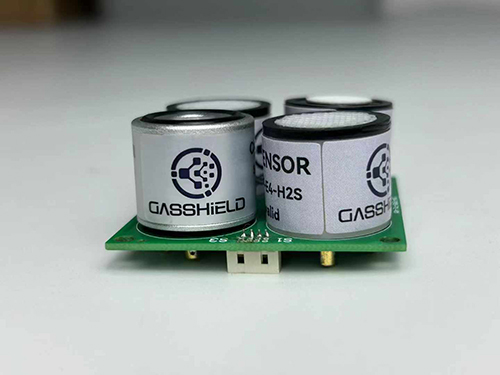
The adaptability and practicality of UGT-E4 lead-free oxygen sensor have been fully upgraded, supporting voltage (0-5V), current (4-20mA), and RS485 digital signal output. It can be seamlessly integrated into various products such as portable detectors, fixed monitoring equipment, and IoT terminals, and can be connected to PLC systems and environmental monitoring platforms. From oxygen deficiency/enrichment warning in industrial enclosed spaces, oxygen concentration control in chemical processes, precise oxygen supply monitoring for medical ventilators, and green production guarantee for food processing, the full coverage meets the monitoring needs of different industries.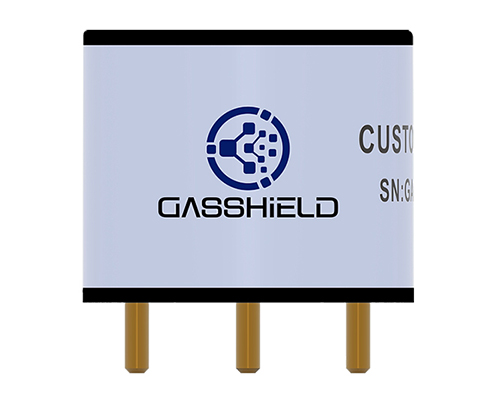
Industry experts say that the launch of lead-free oxygen sensors in the UK not only solves the industry pain points of "environmental pollution, short lifespan, and high compliance risks" of traditional lead containing sensors, but also sets a new benchmark for "environmental monitoring equipment to meet standards first" in the industry. Its multiple breakthroughs in environmental protection, stability, and adaptability will accelerate the industrial monitoring field into a lead-free and long-term era, providing core technological support for the sustainable development of global green industry.
 UK's Airshield hydrogen sensor breaks through the energy storage safety defense line
 Industrial innovation! Technical solution of British gas shield combustible gas sensor in robotic dog
 UK Airshield Ultra-Micro Technology! A Somatic Robot Gas Sensor Launched
 Break through technological barriers! UK Airshield, a super-strong anti-poisoning combustible gas sensor
A technology-based company focusing on research and development of gas sensors
Feel Free To Contact Us →