
Currently, Australian National University researchers have developed a gas sensor made of nanowire arrays, which can be easily integrated into silicon chips due to its small size. Moreover, according to the main author of the paper, Shiyu Wei, this sensor does not require a power source and can be powered by solar energy.
Wei added, "Integrating such devices into the Internet of Things sensor network provides significant advantages in terms of system scale and cost due to its low power consumption. This type of sensor can also be installed in cars, and if it detects excessive nitrogen dioxide (NO2) emissions in the exhaust, it can issue an alarm and send information to mobile phones
This technology can also detect other gases, such as acetone. Acetone can be used as a non-invasive breath test for ketosis (including diabetes ketosis), which can save countless lives. "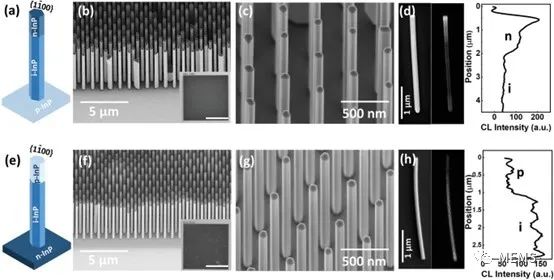
The self powered gas sensor developed by researchers can achieve an 84% sensing response to 1ppm NO2 without power supply, and record detection limits as low as sub ppb concentration levels. Moreover, the sensor has little dependence on the intensity of incident light and can operate even under less than 5% sunlight.
 UK's Airshield hydrogen sensor breaks through the energy storage safety defense line
 Industrial innovation! Technical solution of British gas shield combustible gas sensor in robotic dog
 UK Airshield Ultra-Micro Technology! A Somatic Robot Gas Sensor Launched
 Break through technological barriers! UK Airshield, a super-strong anti-poisoning combustible gas sensor
A technology-based company focusing on research and development of gas sensors
Feel Free To Contact Us →